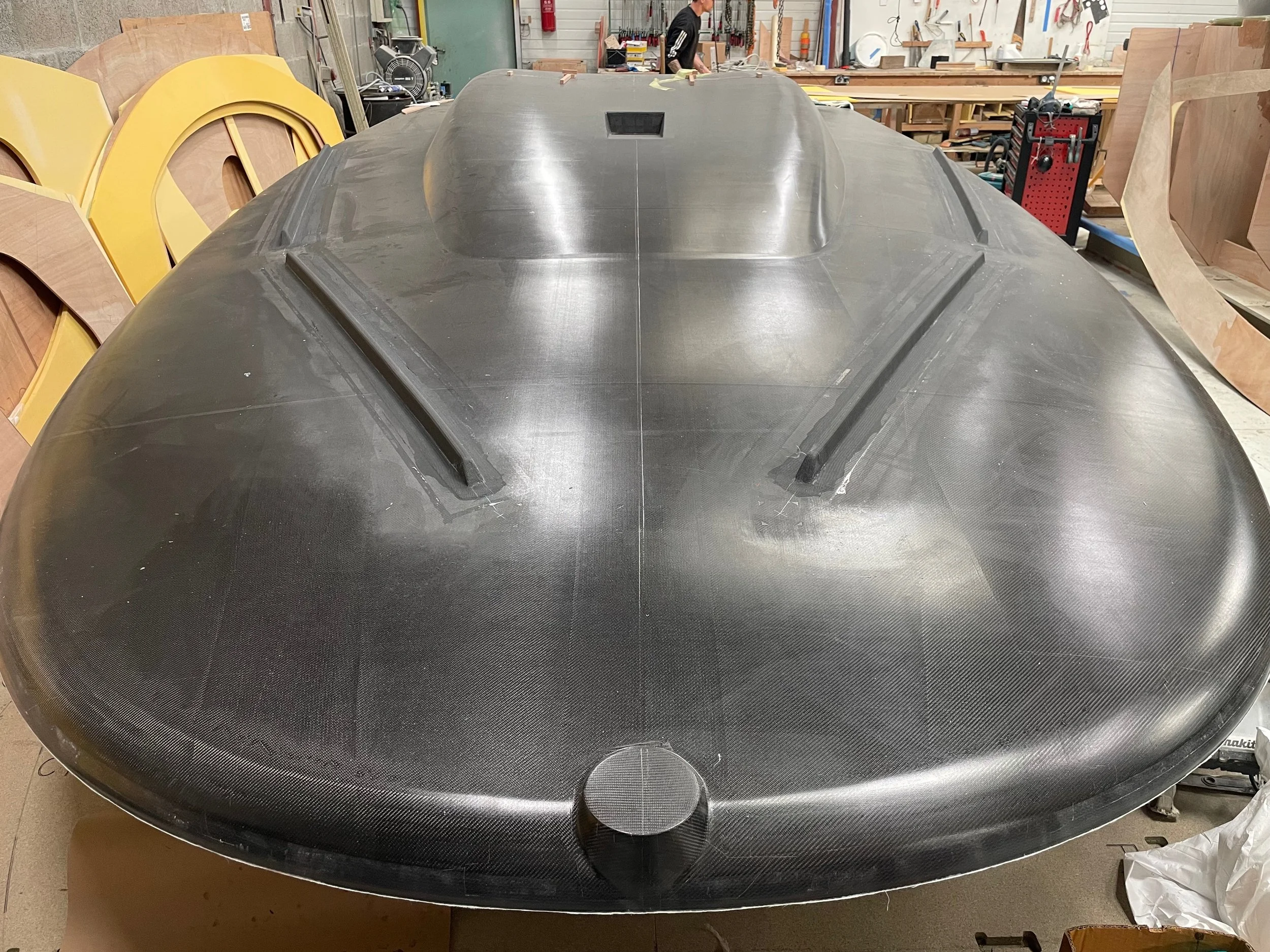
A Focus on the Deck
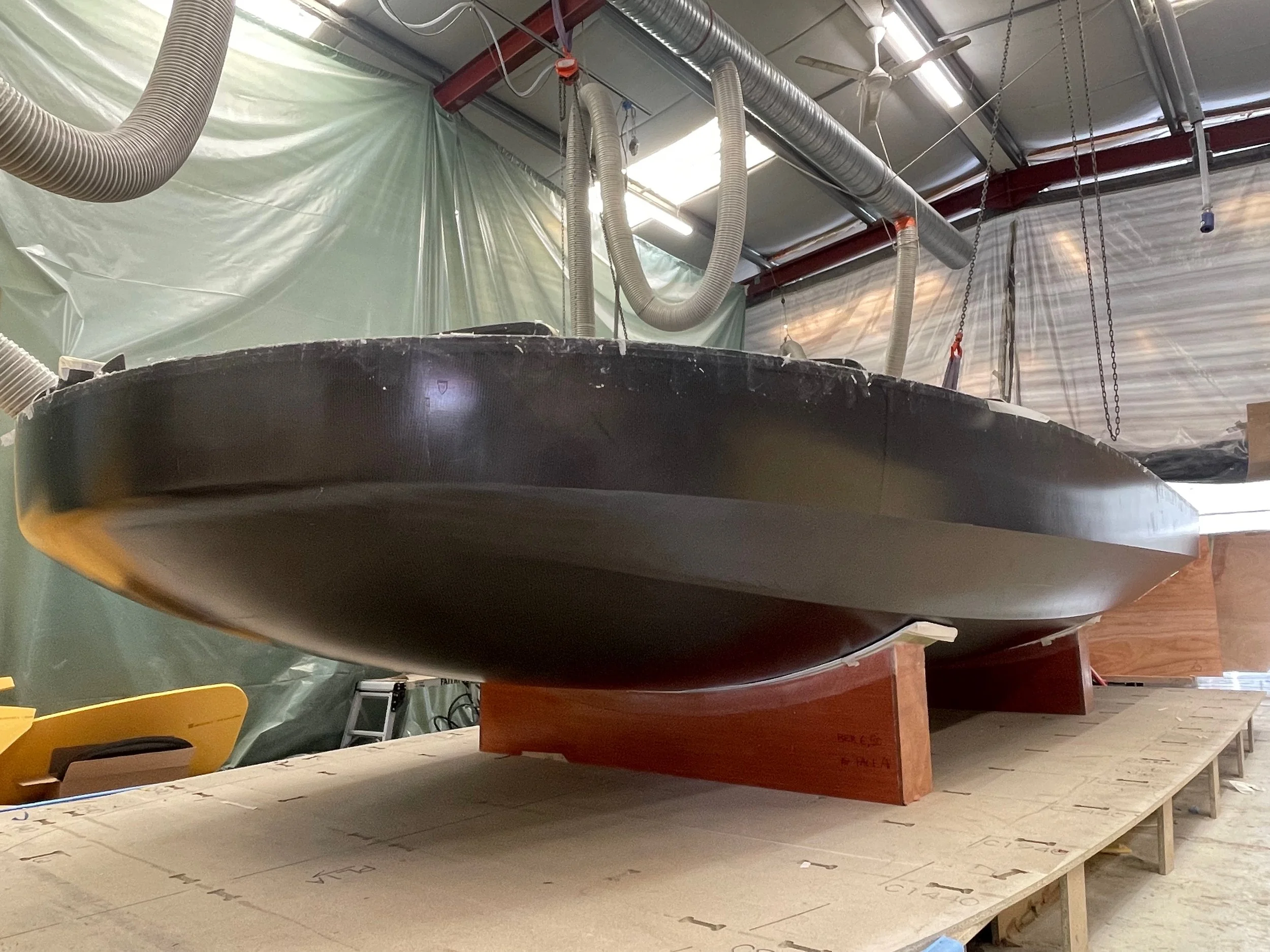
In addition to the hull, JPS has also built the deck completely out of carbon fiber from a mold. The scow bow is a distinctive feature of this boat, with the walkable surface area falling just inside the toe rail and lifelines. On the cabin roof, the negative rectangular space is where the base of the rotating wing mast will be attached. There will also be solar panels on either side and the foot of the mainsail will sweep this part of the deck to maximize sail area.
All of the lines will lead aft to the cockpit. While there is not much space, it allows just about everything to be within arms reach. With just two deck mounted winches, one on each side of the companionway hatch, they help keep the profile of the boat low. Unlike Terminal Leave, this boat will not have a winch, halyards or control lines on the cabin top.
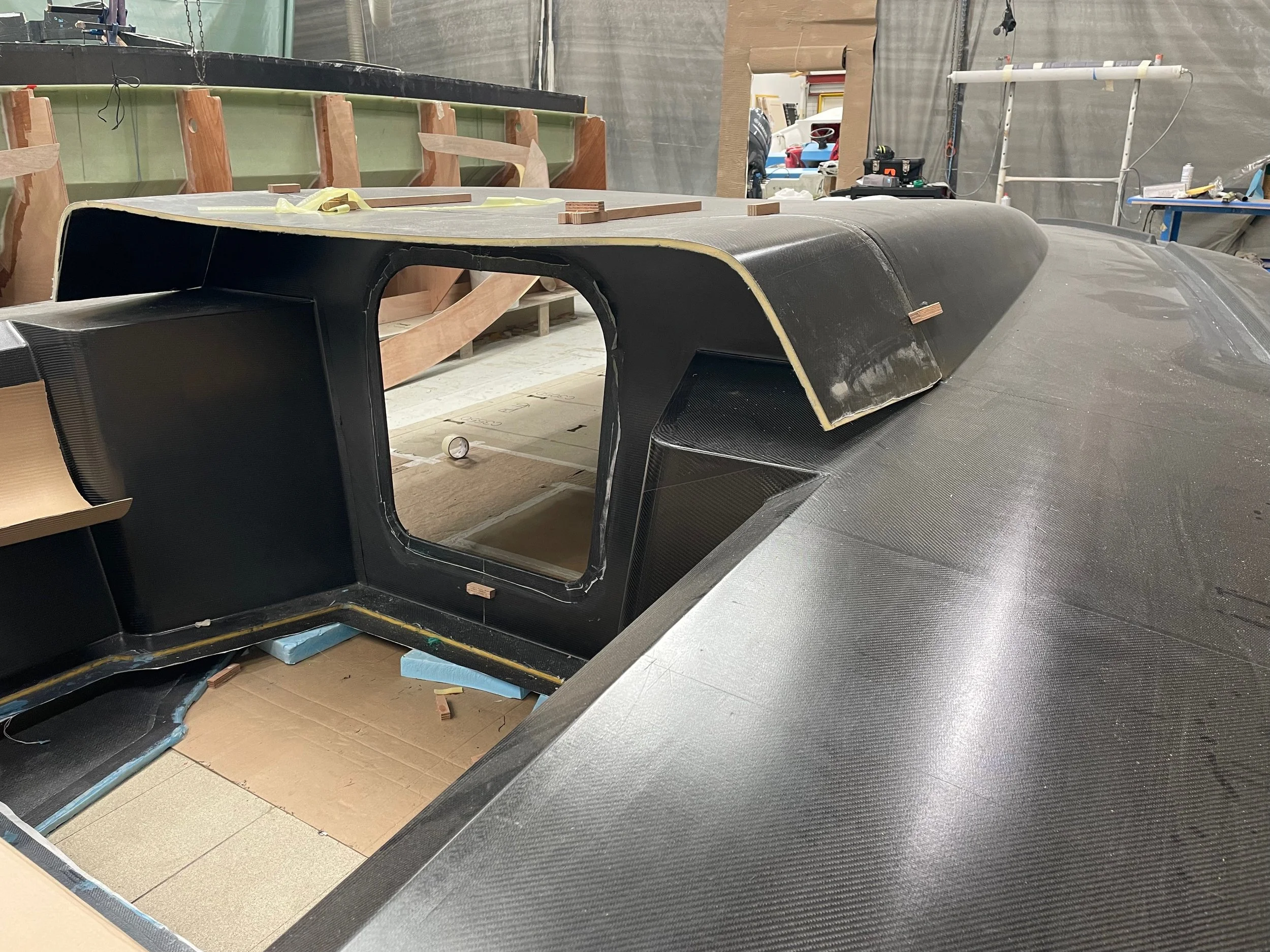
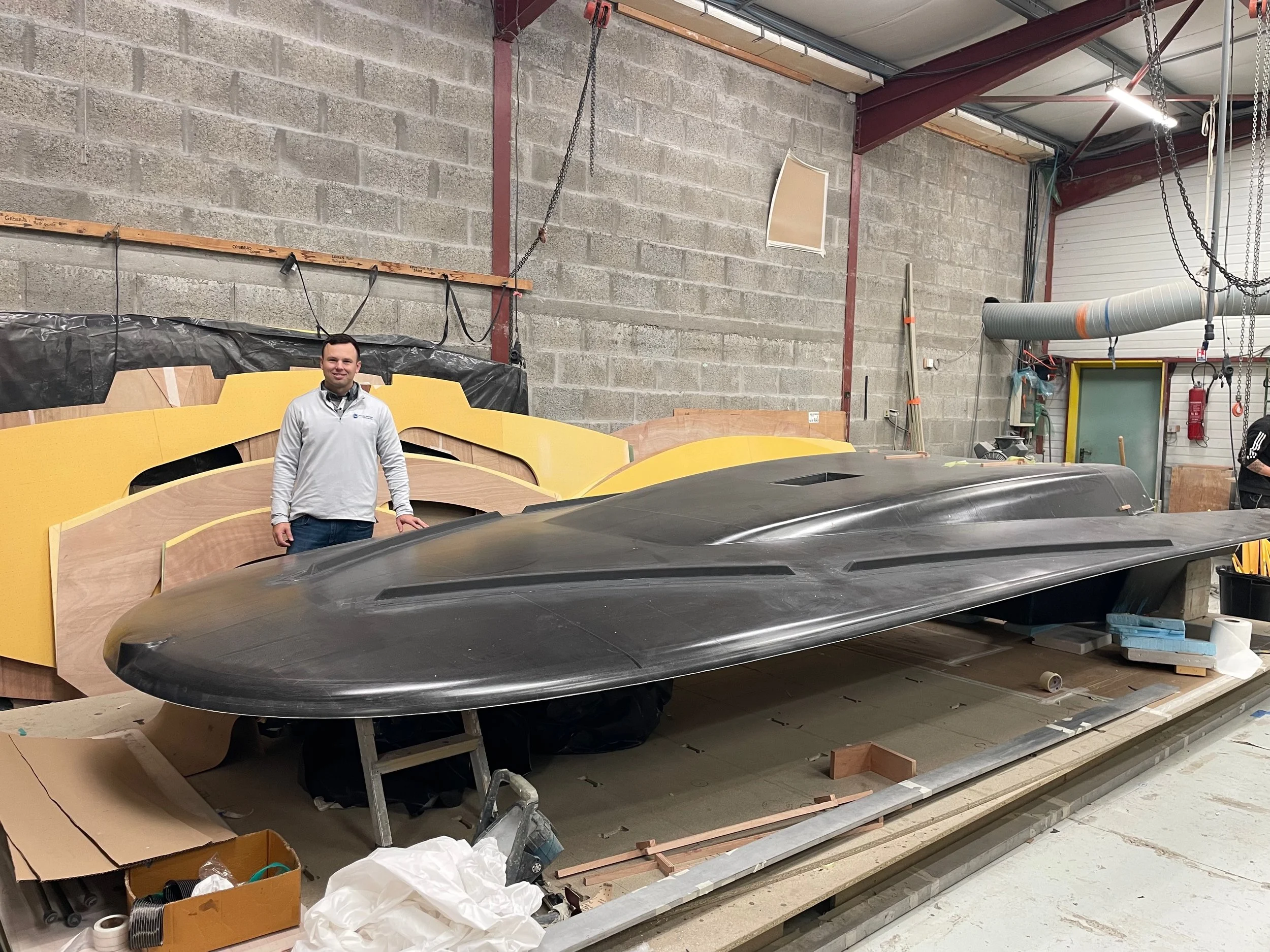
You will also notice there are no portholes or hatches on the deck. While it will make for a dark boat down below, this will help keep the interior dryer, reduces the risk of damage, keeps the deck strong, and is lighter for construction.
These photos are of the deck flipped over, as they prepare the edges of the deck to fuse to the hull.
As mentioned previously, the deck sole will cover the white foam towards the stern of the boat. We are getting really close to the deck and hull coming together!
What are the Rules for Designing a New Boat?
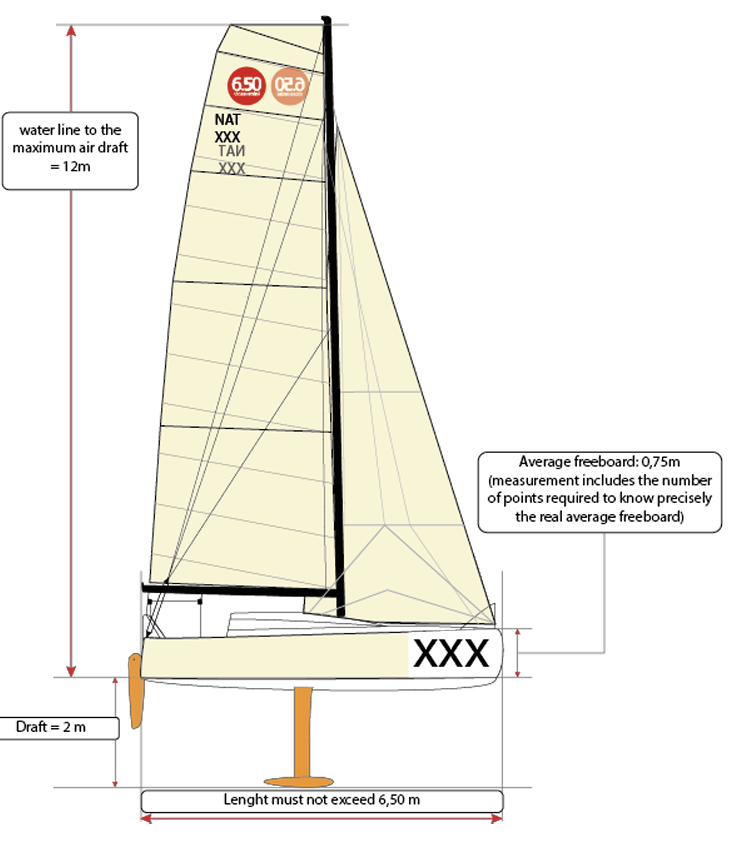
The prototypes within the Classe Mini 6.50 must fit within a “box” rule and do not race under a handicap or rating rule. The first boat to cross the finish line wins, therefore having the fastest boat is a key element.
The proto box rule consists of the following dimensions:
Length: 6.5 m / 21.3 ft
Width: 3 m / 9.8 ft
Water Draft: 2 m / 6.5 ft
Air Draft: 12 m / 39.3 ft
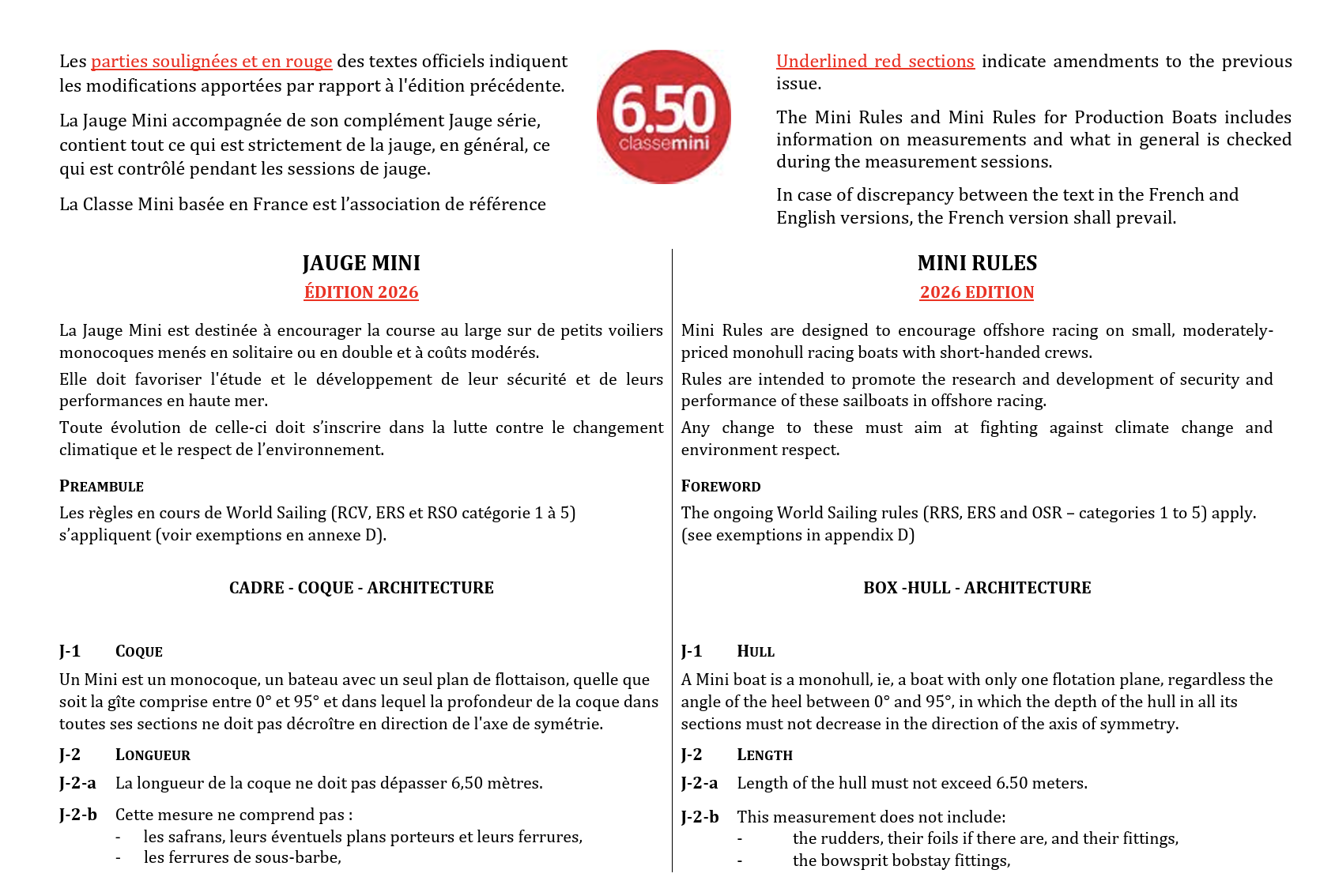
While the rest of the box rule becomes slightly more complicated for certain aspects of the boat, the fundamental box rule listed above provides key dimensions that all designs must fit within. The main differences between prototype and series (like my last boat Terminal Leave) are as follows:
A boat builder must build 10 identical production boats under the series box rule (includes thorough Classe inspections)
Restrictions on build materials: Fiberglass hulls, aluminum rigs
Shorter drafts (Water draft: 1.6 m / Air draft: 11 m)
Restrictions on expensive sailing electronic instruments (brands and models)
Significant restrictions on use of carbon fiber
What questions do you have on the rules and what more do you want to hear about? Respond to this email or contact me at peter@pgnoceanracing.com
We are still seeking support through donations to race for U.S. Patriot Sailing and provide more opportunities for helping veterans navigate challenges through sailing. If you want to donate to this campaign or U.S. Patriot Sailing, please click the button bellow. Thank you!
More video updates on Instagram:


Sailing Terminal Leave in Annapolis this October (Photo Credit: Matt Ellis)
Looking Ahead — The 2027 Mission
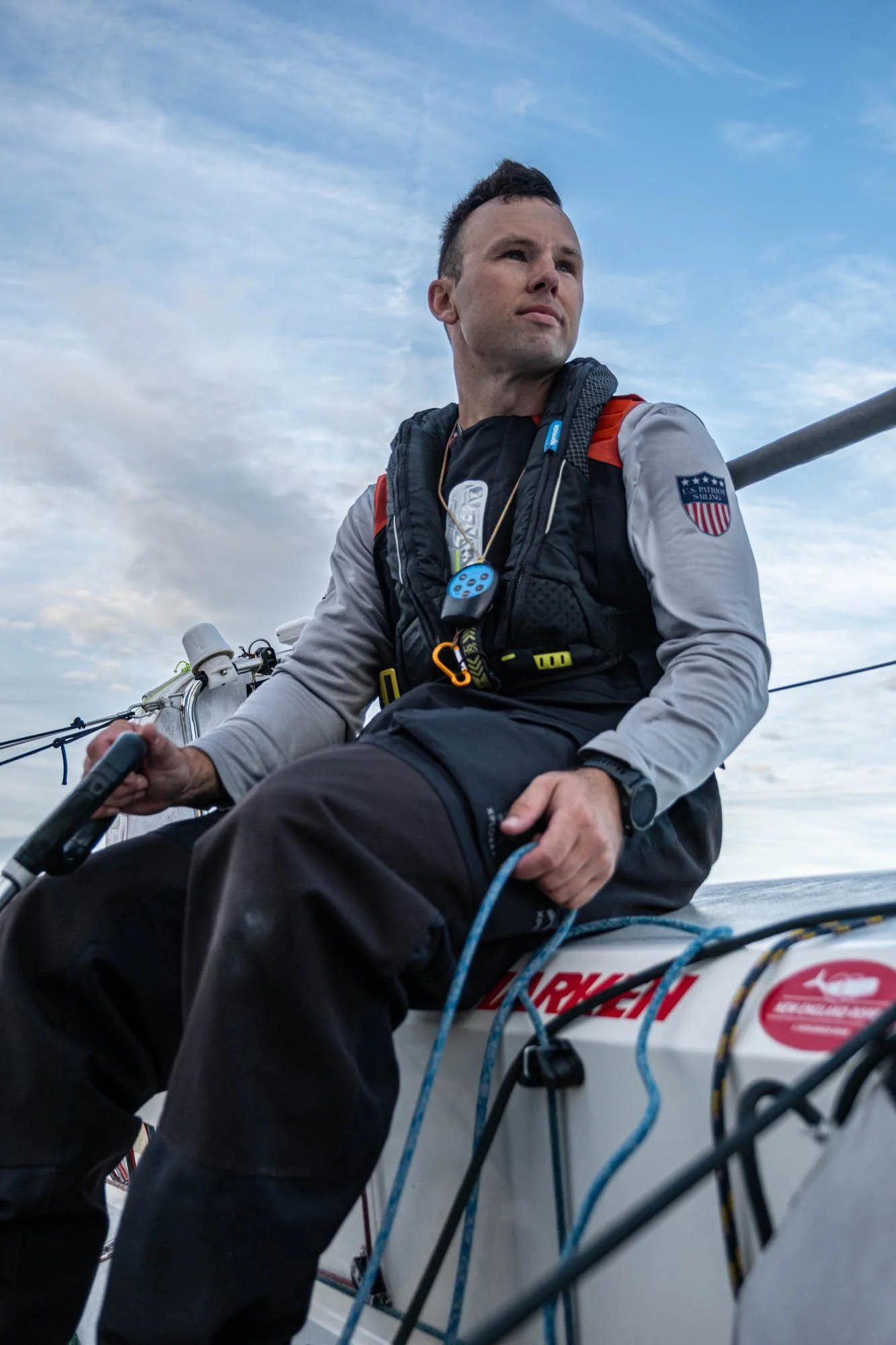
While the last campaign focused on raising awareness for U.S. Patriot Sailing, this new mission is about expanding support — enabling the organization to create even more opportunities for veterans.
One major goal of U.S. Patriot Sailing is to introduce a cruising platform where veterans and their families can share calm, restorative experiences on the water — a vital way to strengthen connection and healing.
U.S. Patriot Sailing remains 100% volunteer-run, accomplishing its mission solely through the generous support of individual donors and grants. Together, we can make this next phase possible.
Donate HERE to support the U.S. Patriot Sailing team.
From raising awareness to expanding support — together, we’re building more opportunities for veterans.
Follow the Mission
As this campaign builds momentum, please makes sure you are following along and stay connected:
Website: www.pgnoceanracing.com
Social Media: Instagram, Facebook, YouTube (@pgnoceanracing)
Instagram usually has the most frequent and quick updates!
Donate: You can support this new campaign with a tax deductible donation through U.S. Patriot Sailing — helping not only this mission, but also the veterans this organization serves. You can choose where your donation goes exactly: support a local team, this 2027 Mini Transat campaign, or the organization at large. Donate HERE
The support for the 2023 Mini Transat was the foundation for everything we’ve achieved so far. I hope you will be part of the adventure as we set out for this new mission.
New design, new challenge, same mission-driven commitment
Questions? Want to support?
Reach out out to peter@pgnoceanracing.com and jane@pgnoceanracing.com
Watch the video below to learn why I’ve decided to compete in the Mini Transat again:
Is your club, organization, or company interested in hearing about this new mission?

Thank You Sponsors & Supporters of the 2027 Mini Transat Campaign


More news to follow soon on returning & new sponsors!!!!