The Mindset Behind the Mission
One of my goals this season is to share more about the personal mental and physical preparations happening alongside the boat build. Not just updates or progress reports, but real insight into what it takes to compete in a new and highly advanced boat designed to foil and race solo across the Atlantic Ocean.
Recently, I was interviewed for an upcoming article with Sail-World that included questions about lessons learned from the 2023 Mini Transat. My immediate answer had little to do with sails, routing, or equipment, rather it was mindset.
Crossing an ocean alone provides clarity. You quickly learn what matters, what you can control, what you cannot, and how much your mindset shapes every decision offshore.
Looking ahead to the 2027 Mini Transat, my mindset has evolved. In the last campaign, much of the focus was proving I could do it: qualify, compete, finish, and fulfill the mission behind the campaign. Now, with the experience of more than 15,000 offshore miles in the Mini and a crossing under me, the focus is sharper.
This campaign is about building something capable of competing at the front of the fleet. It means a new prototype, more training, better preparation, and the expectation to perform at a much higher level.
Remaining at the center of it all, is a purpose driven mission. This campaign builds on momentum to create even greater support for U.S. Patriot Sailing. Performance matters because it creates visibility, which helps create additional opportunities to move that mission forward. Racing well is not separate from the purpose; it is one of the best ways to advance it.
There are five key themes shaping how I approach this season.
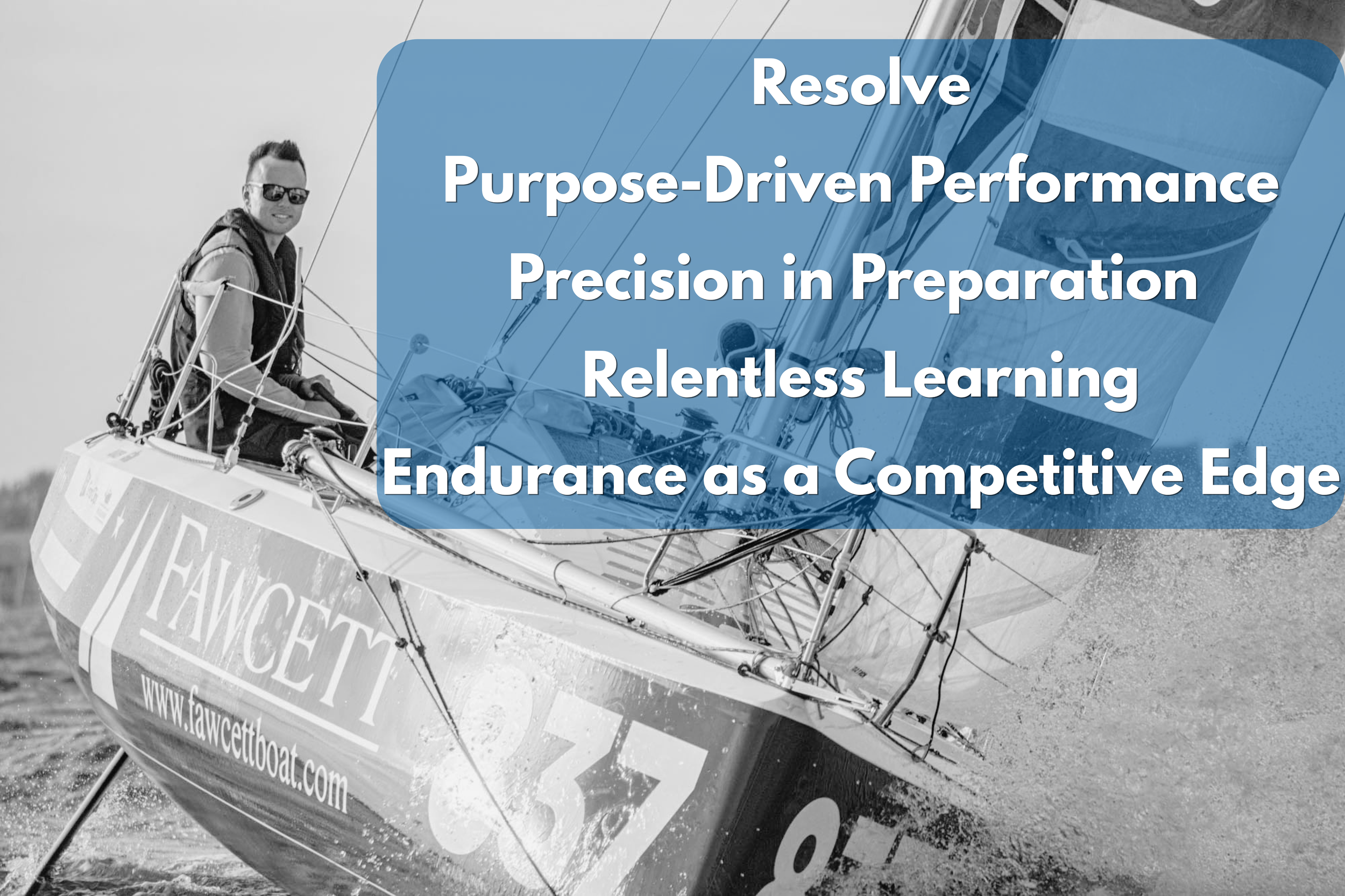
1. Resolve
Throughout every step of this campaign, I have been committed to a course of action that requires constant problem solving. Resolve is not just about race day. It applies to the decision to start this campaign, the years of preparation behind it, and the challenges still ahead on the water.
Building a competitive Mini Transat campaign is not a linear process. It requires adapting to changing plans and continuing forward when progress feels slower than expected. That is true whether it is funding the project, solving technical challenges during the build, or managing setbacks offshore.
The 2023 Mini Transat reinforced what resolve looks like offshore. When my rudder broke off, the race changed instantly. Competition became problem solving as the line between racing and survival became very real. The focus narrowed to protecting the boat, preventing more damage, and finding a way to keep going.
There was no room for frustration or hesitation. Only action. In moments like that, resilience becomes a key factor. You rely on your preparation, trust your instincts, and keep moving forward even when the outcome is uncertain. That is where resolve matters most.
This new prototype will bring its own version of that challenge. Resolve means staying committed and finding solutions through all of it.
2. Purpose-Driven Performance
Purpose is the core of this campaign, but performance also matters.
The goal is not simply to complete another Mini Transat. The goal is to race at the front of the fleet, because results create visibility, and visibility creates opportunities to support something bigger than the race itself.
My first Mini campaign was centered on raising awareness for U.S. Patriot Sailing and the impact that organization had on my own life. We were successful in supporting the veteran community by increasing participation and bringing in new donations to the team. This next campaign builds on that foundation. The mission is focused on expanding support and creating more opportunities for veterans through the sport of sailing.
That is why performance and purpose are directly connected. Racing well is not separate from the mission—it is one of the strongest ways to advance it.
The better we perform, the more attention the campaign generates. More visibility means stronger partnerships, more sponsor support, and a greater ability to create real impact beyond the sport.
Purpose gives this challenge meaning, and performance gives it reach. Both are necessary to be successful in achieving the mission.
3. Precision in Preparation
This is where confidence is built over time.
In offshore racing, small advantages matter. A tailor-made sail plan, a well-tuned autopilot, an efficient cockpit layout, removing unnecessary weight…it all adds up.
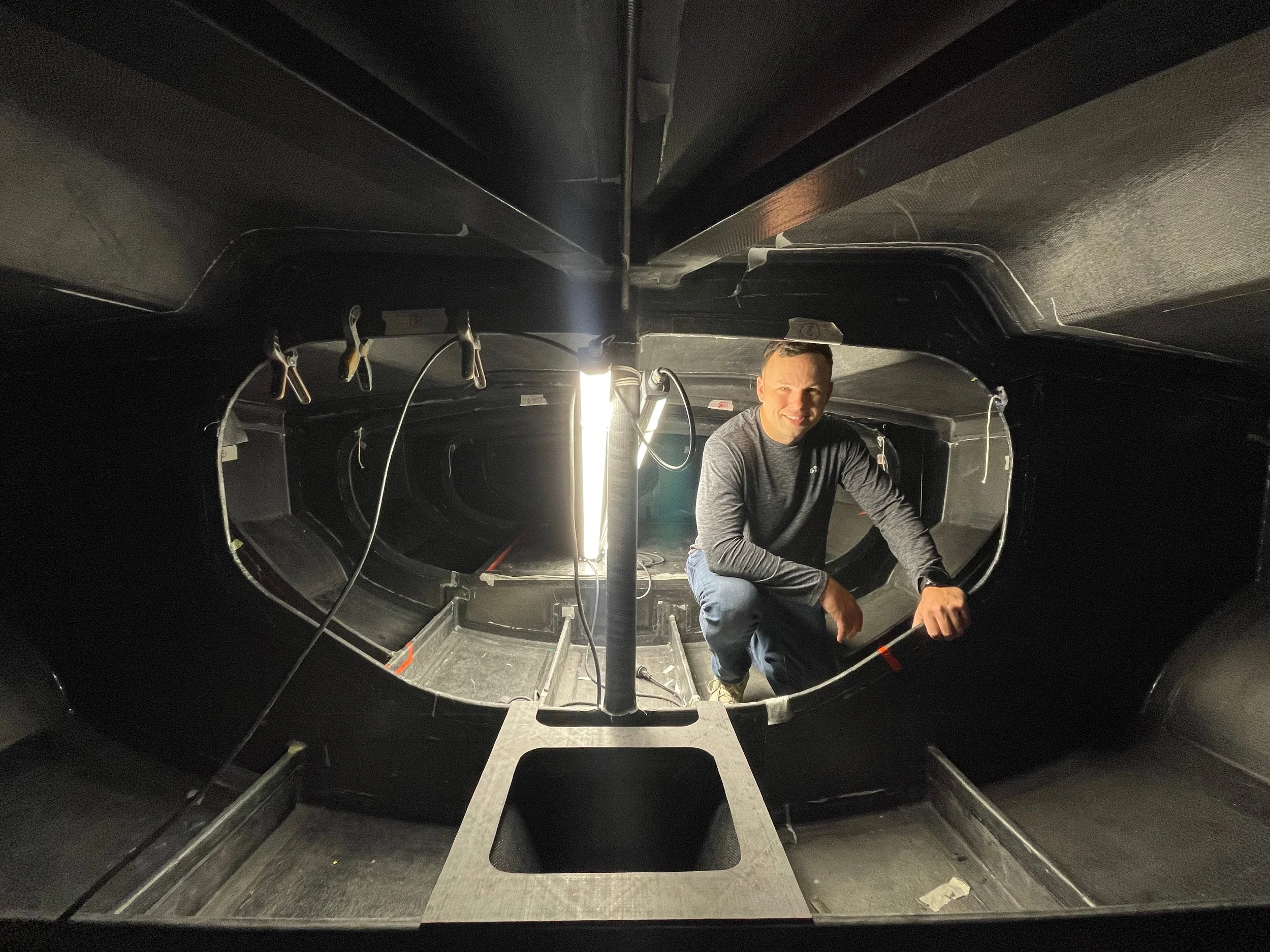
That level of preparation takes time and attention to detail. Building a new foiling prototype means constant testing, refinement, and repetition. Every system has to be understood and every decision has to increase performance offshore.
A lot of that work is not visible from the outside observer. It occurs throughout every phase of the build, training days, and racing. I hope to be able to share more on this process over time.
Let’s be clear. The goal is not perfection; it is consistent improvement. Precision comes from doing the small things well, over and over again. The greatest constraints to this theme will be budget and time.
4. Relentless Learning
One of the things I value most about this class is how much it forces me to keep learning. No matter how much experience I have, there is always more to understand. With this new boat, the amount I have to learn will increase exponentially.
This season is not just about training to race. It is about learning how to sail a new and complex prototype. From experimenting with the foils, to autopilot fine tuning, to discovering the performance polars, and energy management, this boat will require many adjustments to get dialed in for competitive racing. Every mile sailed becomes feedback to learn and grow from over time.
I do not expect to have all of the answers right away. This goal is to ask questions, soak up advice, learn through training, keep improving, and remain open minded. I also can’t forget to listen to what the boat and process are teaching me.
5. Endurance as a Competitive Edge
I have come to see endurance as a real part of performance.
Not just physical endurance, but mental endurance too. The ability to stay sharp after days offshore, make smart decisions while tired, and keep pushing through long periods of discomfort, both on and off the water.
One of the biggest lessons from the Mini Transat was realizing how much offshore racing rewards consistency over intensity. It is not about one great day or one perfect decision. It is about staying disciplined, managing fatigue, and continuing to make good choices over time, especially when you are tired, frustrated, or uncomfortable.
During the two years in between campaigns, I found ultra marathon training to be the closest thing to solo ocean racing. While I returned to active duty for a year and could not disappear offshore for weeks at a time, I shifted that focus into endurance training on land. That led to running my first trail 50k race in Maryland and later a trail 50-mile race in Arizona.
Ultra running reinforced the mindset of consistency for me. Long runs and strength training are not just about fitness, they build patience, discipline, and the ability to stay steady when things get difficult.
It also changed how I think about fueling. Nutrition and hydration have a direct impact on decision-making, recovery, and consistency while offshore. Through ultra running, I learned how much physical performance and mental clarity depend on managing energy well. That same discipline applies on the boat. Eating and drinking properly is not just about staying healthy, it is part of staying competitive.
Endurance is not separate from competition. It is one of the strongest advantages I can build going into this season.
Looking Ahead
This season is not about immediate results. It is about building the foundation to compete when it matters most.
Launching a new foiling prototype is only the beginning. From there comes the real work: understanding the boat, refining the systems, qualifying, racing, and turning potential into consistent performance offshore. That process takes time, patience, and a willingness to stay focused on long-term progress instead of short-term frustration.
Just as important, and often less visible, is the challenge of funding it all. Building a competitive Mini Transat campaign requires far more than sailing well. It means finding partners who believe in the mission, earning sponsor support, and constantly balancing performance goals with financial reality. In many ways, building the campaign off the water is just as demanding as racing it on the water.
The goal is still simple: line up in La Rochelle in 2027 with a boat and campaign capable of competing at the front of the fleet.
But beyond results, I want this campaign to continue creating something bigger. More support for U.S. Patriot Sailing, more opportunities for veterans, and a stronger example of what purpose-driven performance can accomplish when the mission is clear.
That is the mindset going into this season. The miles ahead are long, but so is the opportunity.
Listen to The Mini Transat Mission Podcast
Become a Part of This Campaign!
Support this campaign by helping us launch with a tax deductible donation
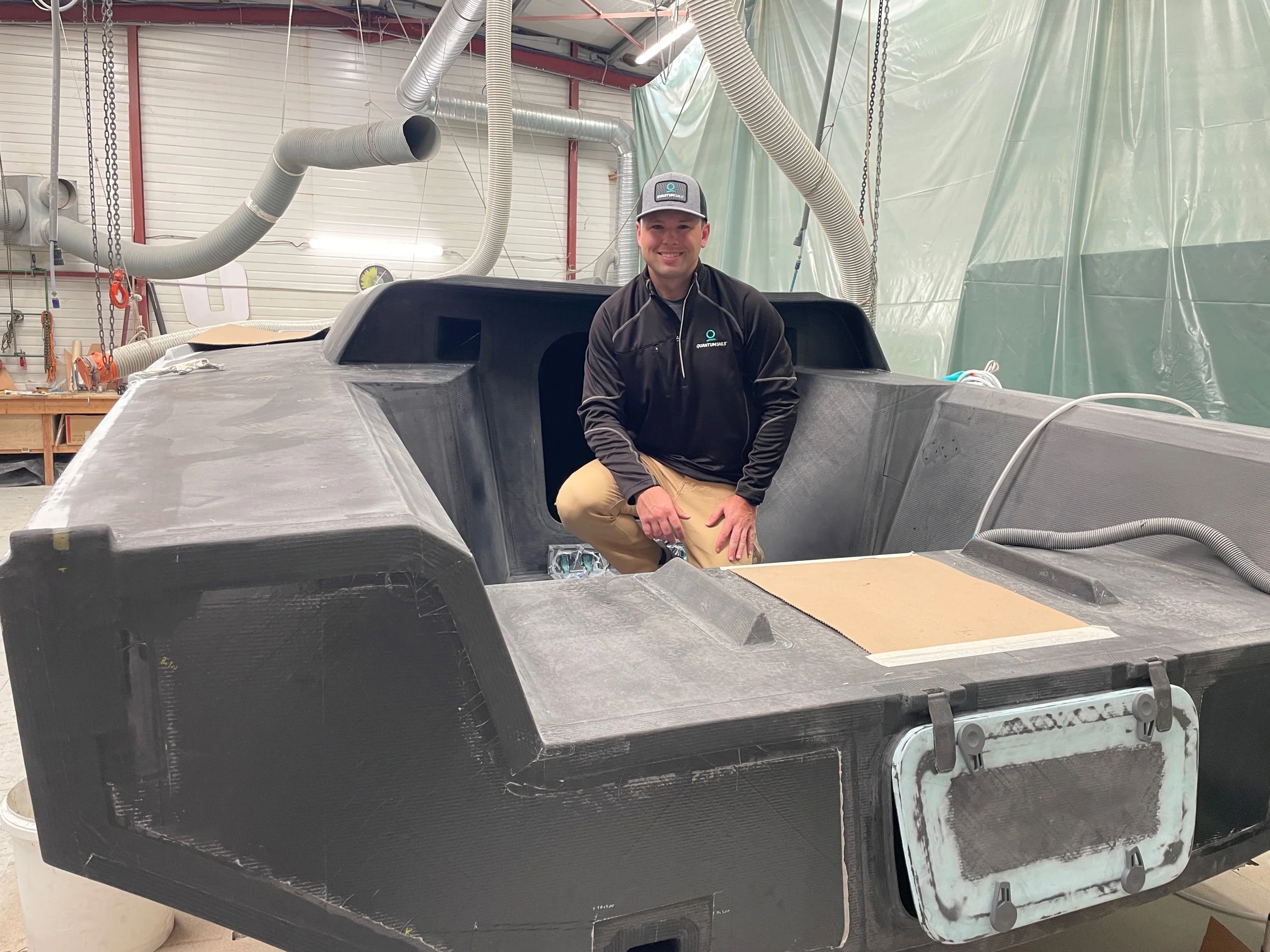
As we enter the final stage of building this new proto, there is a long list of essential equipment and parts that must go into the boat. While we have some strong initial backing to start the build the boat, and have lowered the overall costs through support from technical partners, but there are still many things we could use your support with!
If you donate to sponsor a part of the boat, we can add your name to it and give you (or your company) shout outs during the installation and the sailing over the next two seasons!
Send me an email and let’s get you on the boat!
Email: peter@pgnoceanracing.com
Check out the CCA article that was published in their Voyages magazine
We are racing to Brazil!
The upcoming Mini Transat starts in September 2027 with 90 Minis crossing the starting line in La Rochelle, France. The fleet will set off to Las Palmas de Gran Canaria in the Canaries for a stop over, then race to Salvador de Bahia, Brazil.
This is exciting for the Classe Mini 6.50 fleet since now we will be crossing both the Atlantic Ocean and equator in the same race. This revived route is already a part of the long history of the race, because it had previously been used six times from 2001-2011.


Sailing Terminal Leave in Annapolis this October (Photo Credit: Matt Ellis)
Looking Ahead — The 2027 Mission
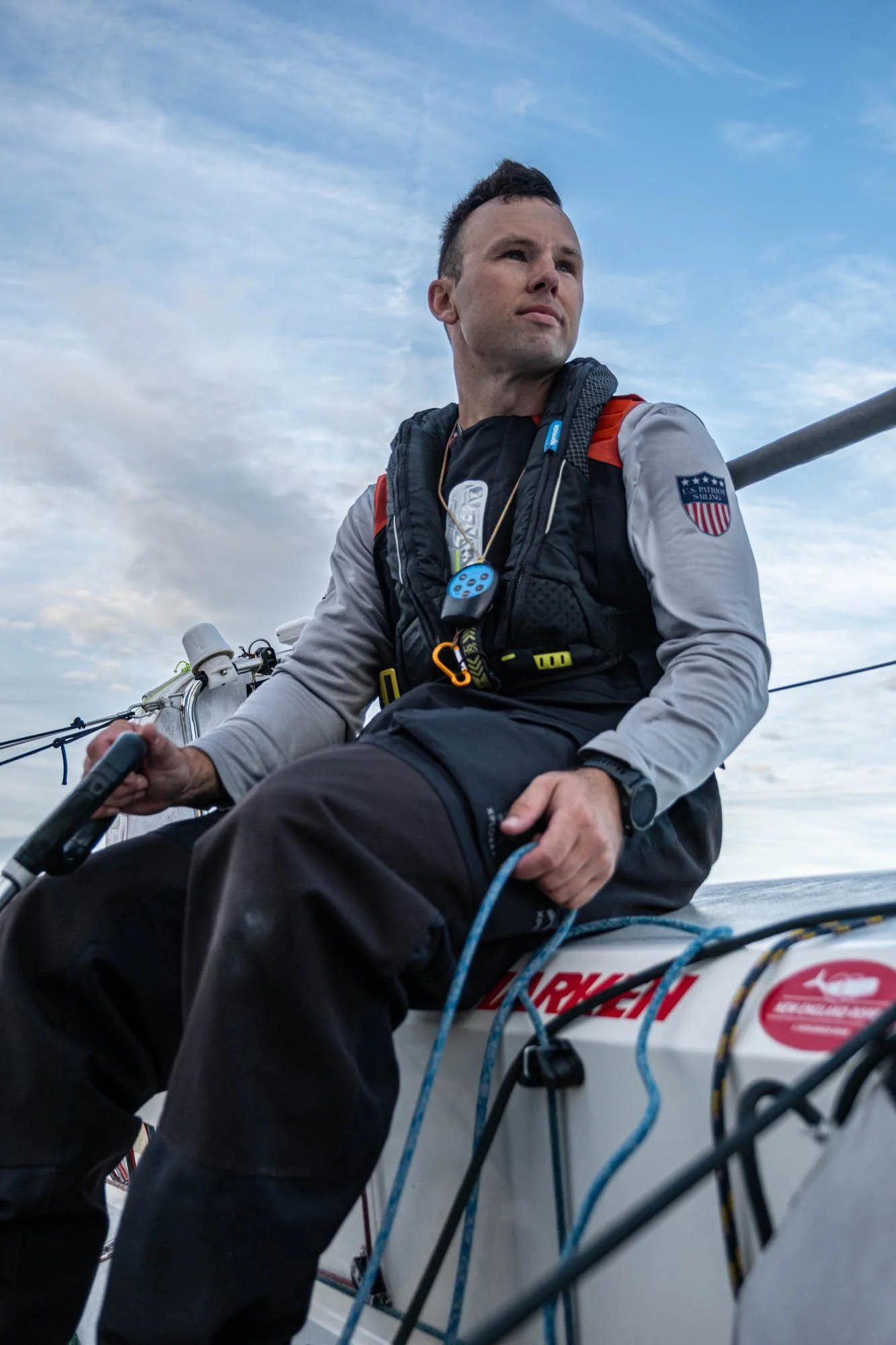
While the last campaign focused on raising awareness for U.S. Patriot Sailing, this new mission is about expanding support — enabling the organization to create even more opportunities for veterans.
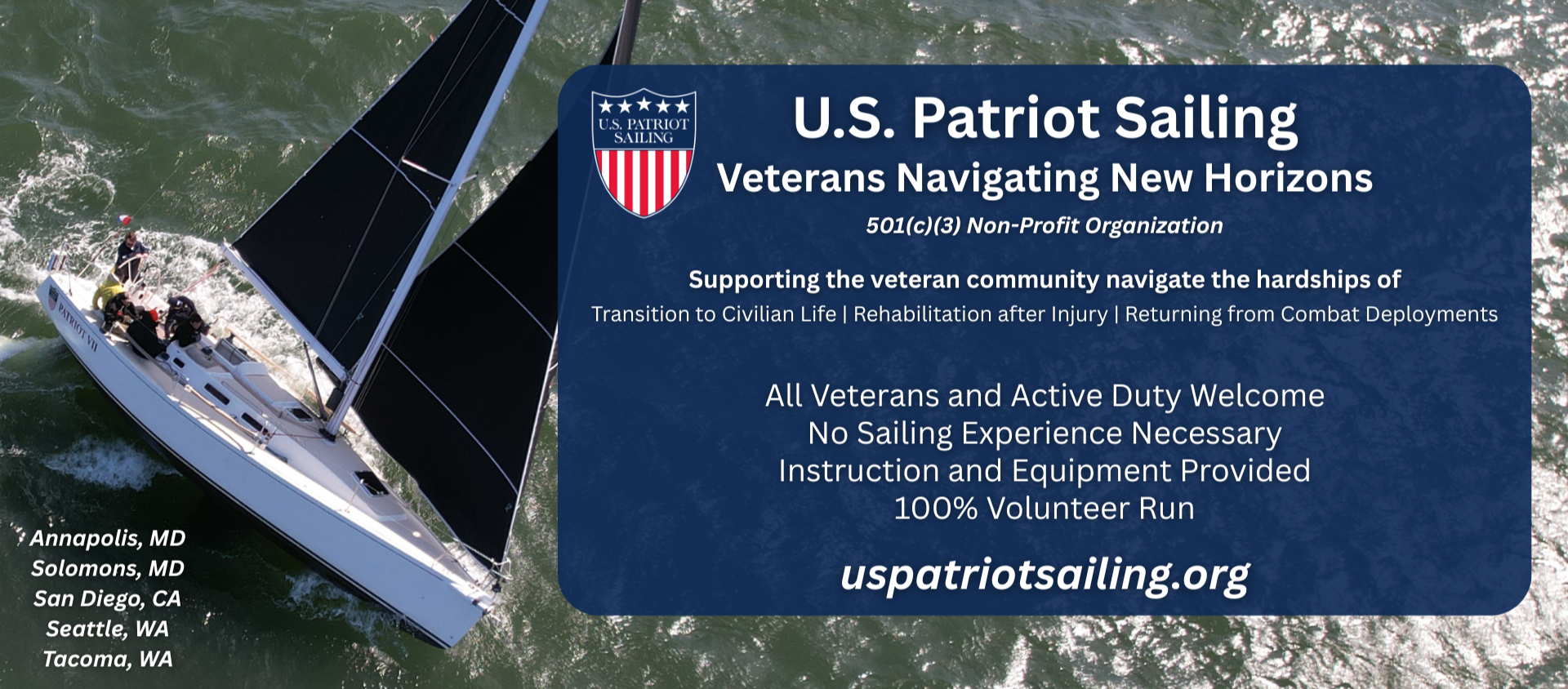
One major goal of U.S. Patriot Sailing is to introduce a cruising platform where veterans and their families can share calm, restorative experiences on the water — a vital way to strengthen connection and healing.
U.S. Patriot Sailing remains 100% volunteer-run, accomplishing its mission solely through the generous support of individual donors and grants. Together, we can make this next phase possible.
Donate HERE to support the U.S. Patriot Sailing team.
From raising awareness to expanding support — together, we’re building more opportunities for veterans.
Follow the Mission
As this campaign builds momentum, please makes sure you are following along and stay connected:
Website: www.pgnoceanracing.com
Social Media: Instagram, Facebook, YouTube (@pgnoceanracing)
Instagram usually has the most frequent and quick updates!
Donate: You can support this new campaign with a tax deductible donation through U.S. Patriot Sailing — helping not only this mission, but also the veterans this organization serves. You can choose where your donation goes exactly: support a local team, this 2027 Mini Transat campaign, or the organization at large. Donate HERE
The support for the 2023 Mini Transat was the foundation for everything we’ve achieved so far. I hope you will be part of the adventure as we set out for this new mission.
New design, new challenge, same mission-driven commitment
Questions? Want to support?
Reach out out to peter@pgnoceanracing.com and jane@pgnoceanracing.com
Watch the video below to learn why I’ve decided to compete in the Mini Transat again:
Is your club, organization, or company interested in hearing about this new mission?