Beyond the Harbor: Why Offshore Sailing Matters for Veterans
Finding recovery, community, and purpose by preparing to sail offshore
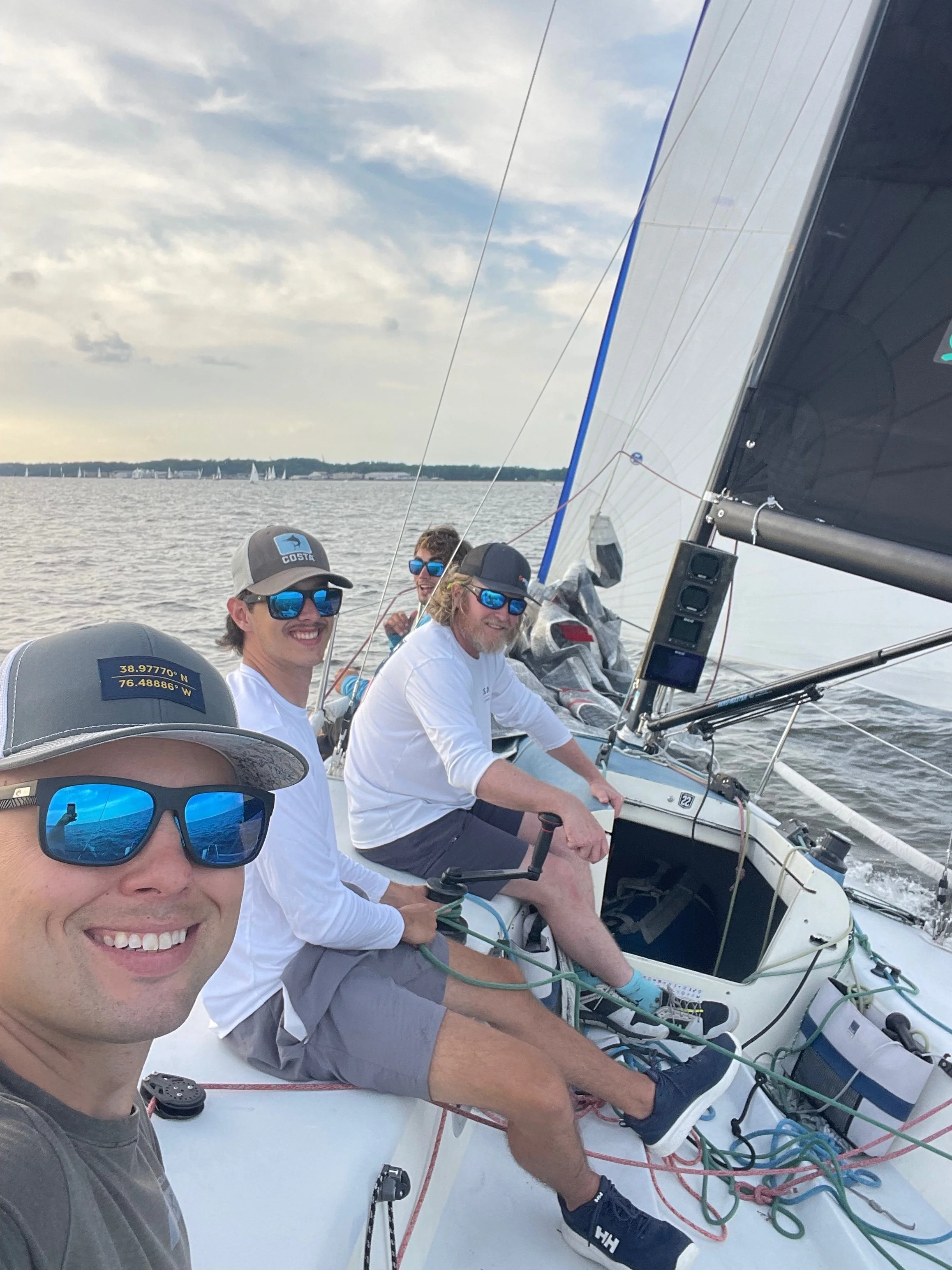
What began with helping the team on a few boat maintenance projects in the winter of 2019 eventually led me to find a renewed sense of purpose and community during a challenging period in my personal life. U.S. Patriot Sailing was there for me after I returned from deployment and as I transitioned off active duty. The team helped me even when I was not prepared to ask for help, and over time it guided me back to my passion for offshore racing.
Today, as an ambassador for U.S. Patriot Sailing, my mission is to use this racing campaign to expand support for the organization and create more opportunities for veterans to experience the benefits of sailing.
Benefits of Sailing
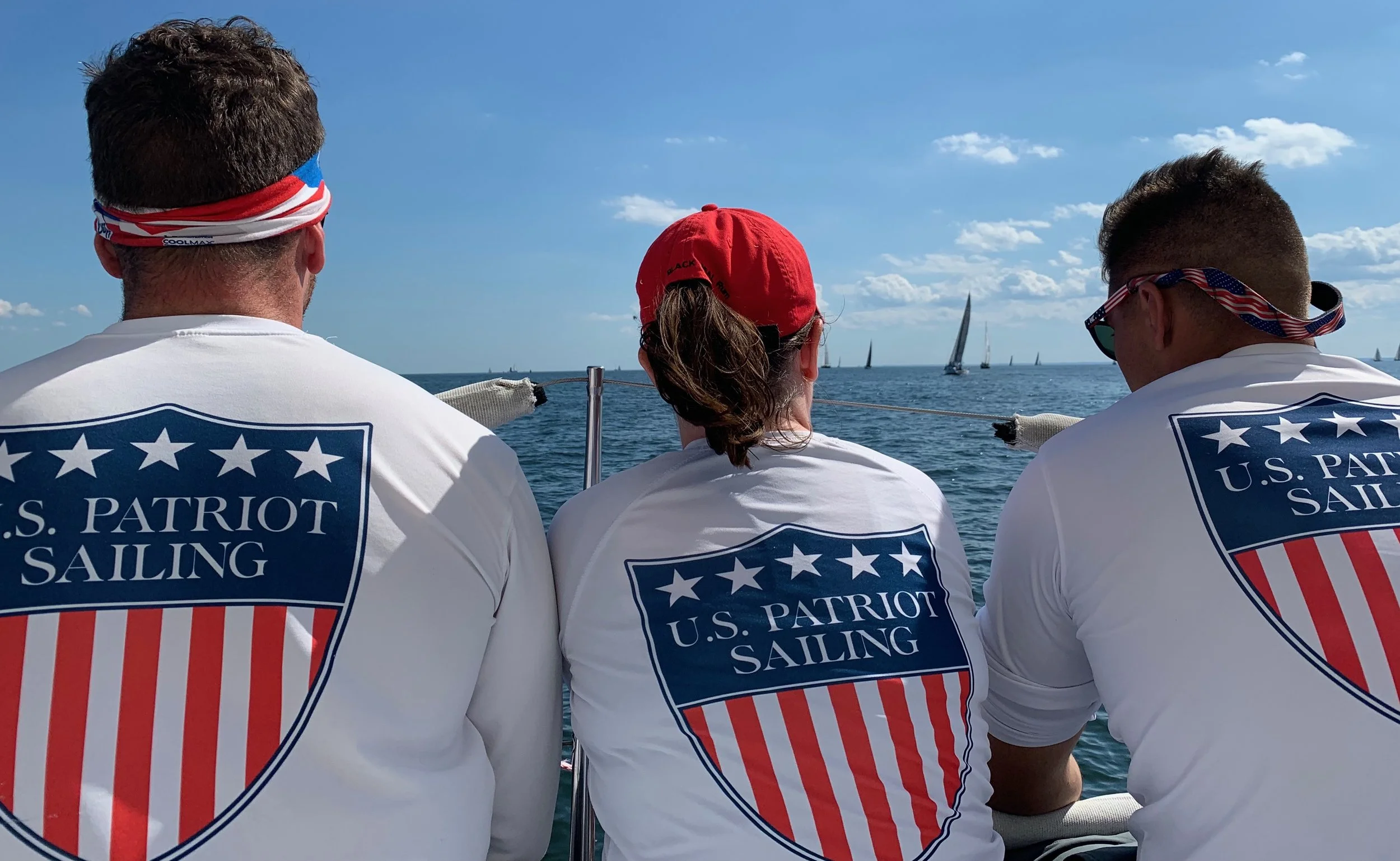
I have seen first-hand the benefits sailing can provide veterans during my time with U.S. Patriot Sailing, first as a teammate and later as a volunteer skipper. For someone new to sailing, the experience often begins with simply being present, feeling the wind and little ripples of water as the boat glides through the surface. Even before someone understands how everything works, there can be an immediate connection to this new environment. The therapeutic nature of sailing can have a calming influence and support mental well-being
For many veterans, the benefit is not simply recreation. Sailing creates an environment where people can reconnect with a team, regain a sense of responsibility, develop new skills, and work towards meaningful goals. Offshore sailing builds on those same benefits by adding greater preparation, trust, self-reliance, and shared responsibility. While sailing is not a replacement for professional mental-health care, it can provide an important complementary environment for connection, confidence, and personal growth.
When a teammate shows up to sail or race with U.S. Patriot Sailing, they quickly become part of the crew with clearly defined roles and responsibilities. That might mean moving around the boat to help keep it balanced, trimming a sail, steering, or eventually taking on a leadership role such as safety officer. There is a strong sense of community and belonging that comes from working together toward a common goal. The camaraderie that many veterans miss from their time in service can be found again on the water.
The roles also create trust, both in relying on others and knowing that others are relying on you. As teammates learn new positions and develop experience, they are able to pass those skills on to newer members of the crew. The value is not simply being on the water. It comes from being part of a team, learning, contributing, and having a meaningful role in the mission that day.
Why Offshore Sailing
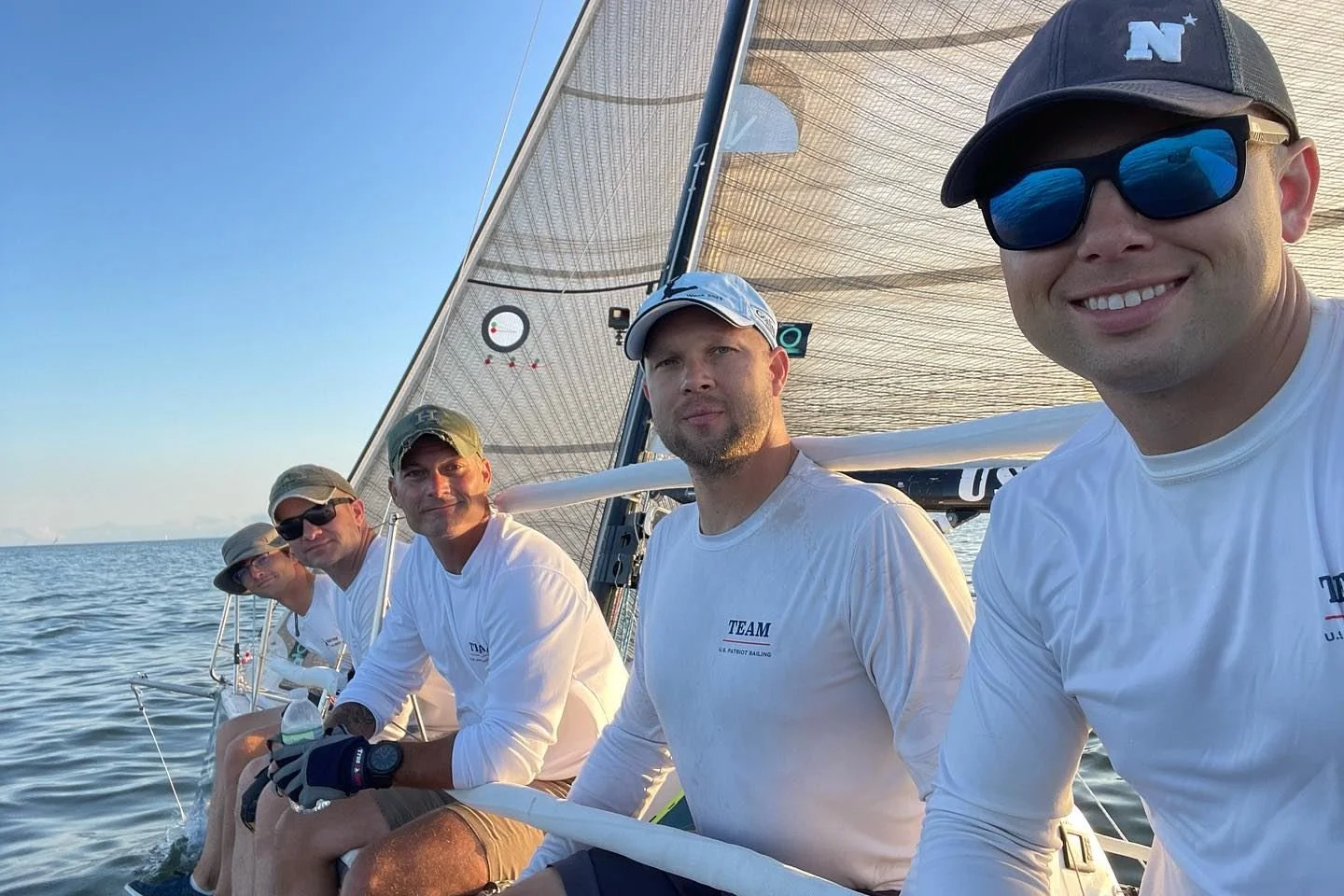
Offshore sailing is a natural extension of local sailing, not a separate mission. Day sailing creates an accessible entry point because it requires less time and experience. Sailing overnight, along the coast, or eventually offshore creates the next level of progression, adding greater responsibility, preparation, and opportunities for skill development.
Offshore sailing introduces new challenges such as navigation, helming, risk management, problem solving, and fatigue management. Watch rotations require crew to operate continuously through the night and across multiple days. Everyone has to contribute while also learning how to manage sleep, changing conditions, and the needs of the boat and crew.
Importantly, these lessons do not require crossing an ocean. Many can be experienced on the Chesapeake Bay, during coastal passages, or through overnight training sails and races. “Offshore” does not have to mean sailing to another country. It can simply mean progressing into an environment where the consequences, responsibilities, and learning opportunities increase.
The value of offshore sailing as a developmental environment is already demonstrated within the federal government. At the U.S. Naval Academy, the Command & Seamanship Training Squadron (CSTS) uses offshore sailing aboard Navy44s to develop small-unit leadership, teamwork, seamanship, navigation, and decision-making in a real-world environment. Midshipmen progress from classroom instruction and local sailing to overnight training and finally offshore passages. While U.S. Patriot Sailing serves a different purpose and population, the underlying principle is similar: offshore sailing creates a demanding environment where preparation, teamwork, responsibility, judgment, and leadership are developed through experience.
Training and Qualifications
Offshore sailing requires managing risk, but it remains an extension of inshore and coastal sailing. The objective is not to take unnecessary risks. Offshore sailing is demanding enough even in benign conditions, which makes preparation especially important.
That preparation begins with the skipper, who leads the crew and is ultimately responsible for everyone onboard. U.S. Patriot Sailing skippers hold qualifications, such as American Sailing Association (ASA) or US Sailing certifications, to help ensure they have the knowledge and experience required to create a safe learning environment.
U.S. Patriot Sailing also provides training, course materials, and access to certifications through qualified instructors in programs like the ASA 101 Keelboat Sailing 1 course. This is an important part of the progression for both inshore and offshore sailing skill development. Veterans can learn from a standard curriculum, practice those skills on the water, and pass an evaluation to earn their certification. Over time, these qualifications help develop more experienced sailors who can assume more responsibility and help their fellow teammates learn skills to be safer out on the water.
Offshore sailing is valuable because it is demanding. That makes preparation and safety even more important throughout the entire process.
Safety at Sea Training
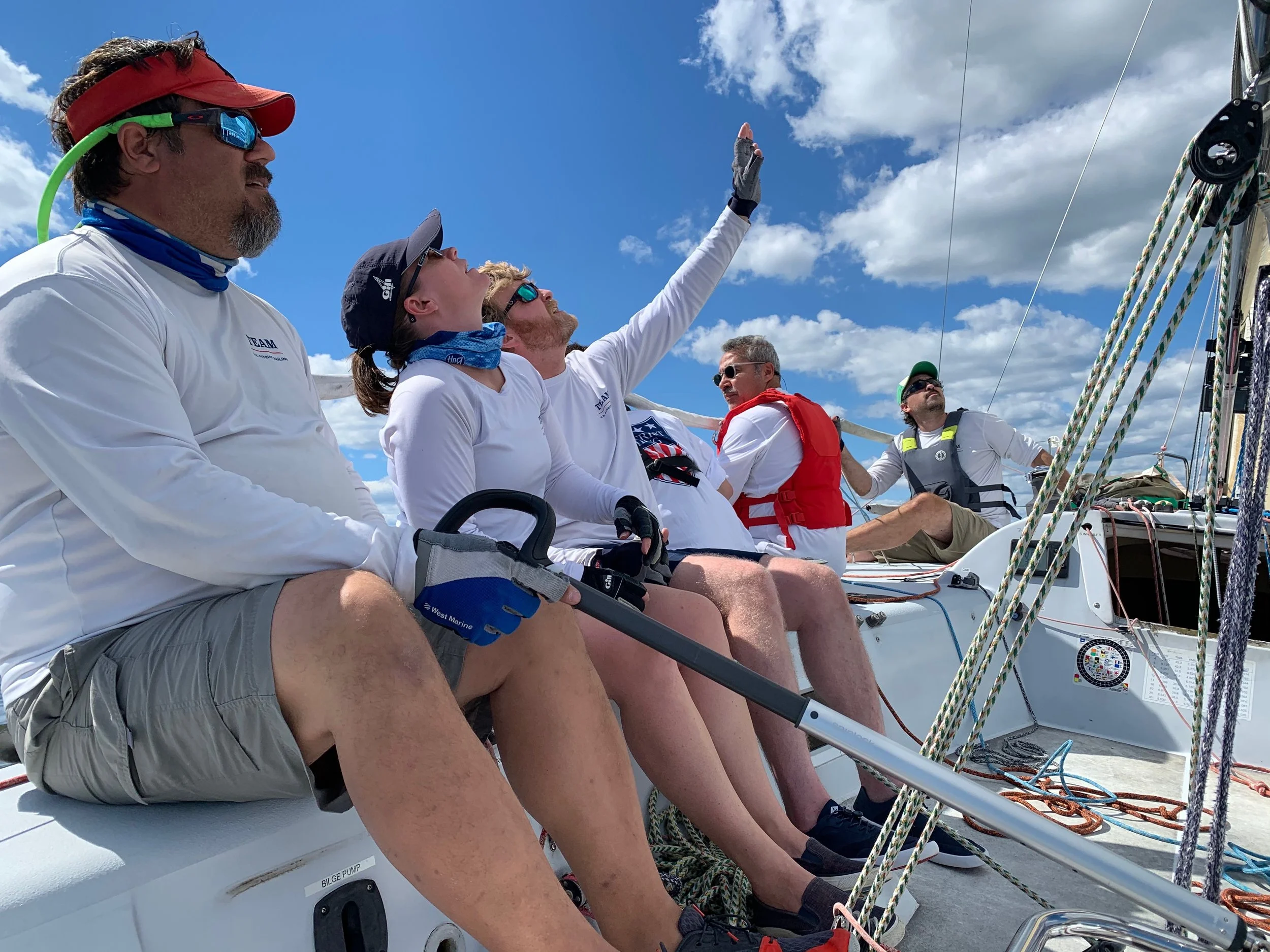
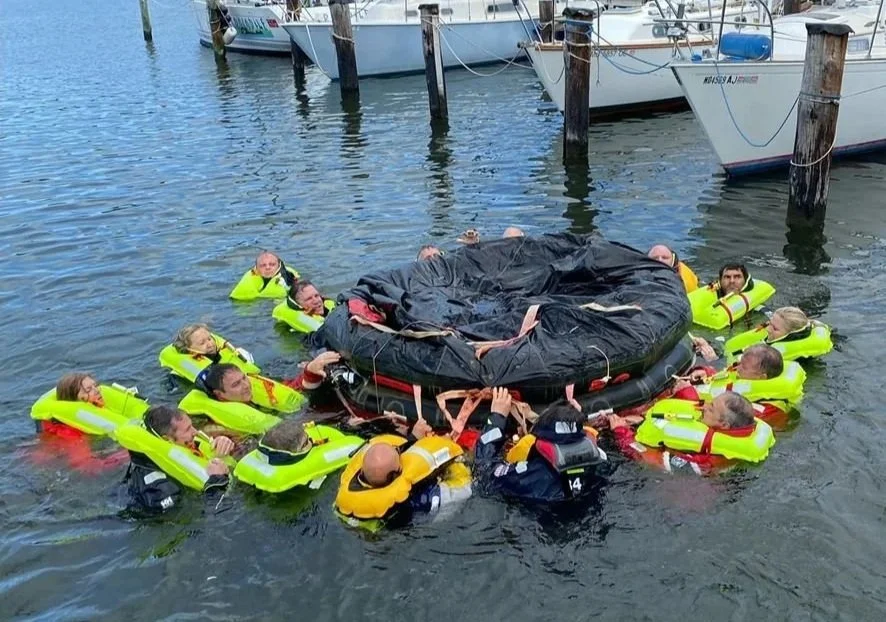
Similar to preparing for military operations, training is an important part of preparing to sail offshore. The US Sailing Safety at Sea Course helps prepare sailors for emergencies, heavy weather, and other situations they may encounter offshore. This course combines classroom instruction and practical application to include using emergency flares, entering the water in an inflatable lifejacket, boarding a life raft, and learning valuable survival skills.
U.S. Patriot Sailing organizes and hosts Safety at Sea Courses for teammates as they prepare to sail in both coastal and offshore environments. In 2024, I participated in one of these courses with the Solomons, Maryland team. I learn something new every time I attend one of these courses, but just as important, the training creates another opportunity to build relationships with teammates while learning together.
A few months later, I applied that training when the team traveled to Ireland to compete in the Beaufort Cup against other military, veteran, and first-responder teams. The event included racing around Fastnet Rock off the southern coast of Ireland, an area known for challenging offshore conditions.
U.S. Patriot Sailing hosts these Safety at Sea courses at no cost to the participants in the organization, paid for entirely through grants and donations. The certification processing fees represent one of the largest remaining expenses for the organization, and U.S. Patriot Sailing makes sure the costs are not passed on to participants, allowing equal access to all veterans. Making that training accessible is an important part of preparing veterans to participate safely in more advanced sailing opportunities.
Annapolis-Newport Race
In 2023, I competed in the Annapolis-Newport Race aboard U.S. Patriot Sailing’s J/109. It marked the twentieth anniversary of my own first offshore race, which had been sailed on that very same course. The team spent months preparing both the boat and the crew, and by the time we crossed the starting line, we felt ready. The bigger challenge was the weather.
While racing naturally focuses on speed, tactics, and strategy, good seamanship always takes priority.
During the first 24 hours, as we sailed south away from Annapolis, the wind and sea state increased. Upon approaching the mouth of the Chesapeake Bay, we evaluated the weather forecasts, our vessel, crew experience levels, and the overall situation. Continuing would have meant leaving the relative protection of the Chesapeake and sailing offshore for several more days into increasingly strong winds and rough seas.
We decided the risk was too high. Much of what we wanted to accomplish had already happened during the preparation and first overnight of racing. We were already achieving our goals in supporting the veterans onboard. It was simply not worth injury or damage to the boat, which becomes an elevated risk in those conditions, to finish the race.
We retired from the race and turned the situation into another training opportunity. We sailed briefly beyond the mouth of the Chesapeake and into the open ocean, giving some of the crew their first experience in larger offshore seas. After a short time, we turned back, reduced sail further, and focused on our new objective: returning safely to Annapolis as the wind continued to increase.
Ocean sailing is not measured only by race results. It is also measured by preparation, judgment, and bringing the crew home safely.
We returned without serious damage to the boat or injury to the crew, and I believe the right call was made in turning back when we did. Experiences like this are exactly why formal training such as Safety at Sea courses matter. Good preparation and training give sailors the knowledge not only to continue when appropriate, but also to recognize when the right decision is to turn around.
Donated Boats Help Make It Possible
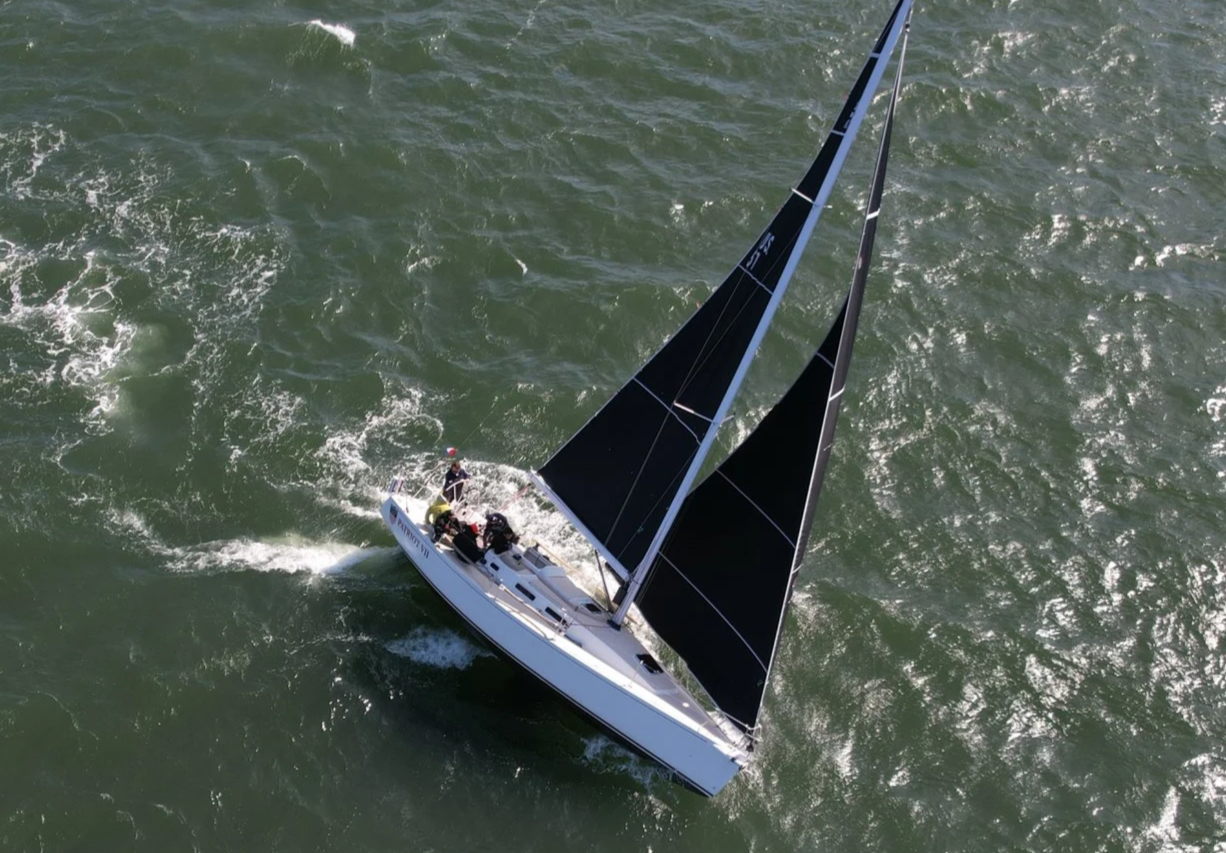
The J/109 Patriot VII from that race was graciously donated to U.S. Patriot Sailing by a local Annapolis owner. My first Mini Transat campaign helped create the initial connection by increasing awareness of U.S. Patriot Sailing within the sailing community. When I received the first call about the potential donation, I visited the boat and connected the owner with the organization’s director.
Patriot VII went on to become an important part of the Annapolis fleet. For several years, it supported introductory sailing, competitive racing, training, and offshore opportunities for veterans. The J/109 was especially valuable because it could serve sailors across a wide range of experience levels while also being capable of serious offshore sailing.
This past year the boat was rotated out of the fleet and sold. This is also an important part of responsible boat donation management. The proceeds can be reinvested into the organization and help offset maintenance and operating costs associated with other donated boats.
U.S. Patriot Sailing accepts boats that can meaningfully support its mission while also considering the costs of storage, maintenance, insurance, and administration. A donated boat can therefore create years of direct impact for veterans before its remaining financial value is ultimately reinvested back into the mission.
Building the Next Offshore Platform
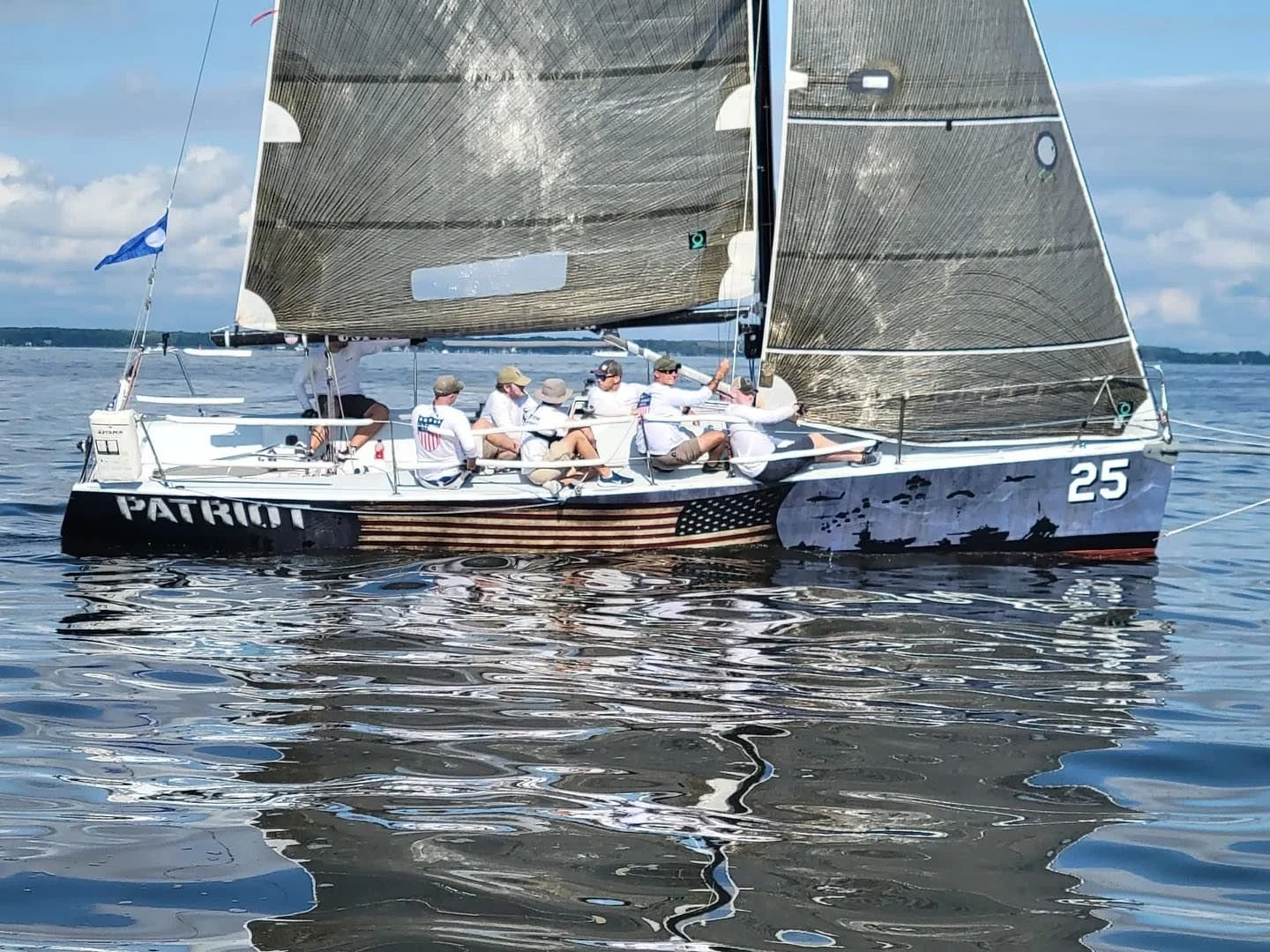
As the team transitions away from the J/109, another offshore platform is taking its place. A Farr 40 was shipped across the country from U.S. Patriot Sailing’s San Diego team to Annapolis to expand training and racing opportunities on the East Coast.
Over the past several months, the boat has received some upgrades, including new standing rigging, updated electronics, new bottom paint, and the addition of a bowsprit for asymmetric spinnakers.
The upgrades are intended to make the Farr 40 a more capable and accessible platform. Updated electronics improve navigation and situational awareness, while the new bowsprit and asymmetric sail configuration will make the boat more versatile for both training and racing. The larger goal is to create another platform where veterans can progressively move from local sailing into more demanding coastal and offshore experiences.
Preparation Matters
The benefits of sailing do not begin at the starting line. Much of the value comes from the preparation: maintaining the boat, practicing maneuvers, planning navigation, organizing safety equipment, and learning how to work together as a crew. Those shared tasks create structure, accountability, and achievable goals long before anyone heads offshore.
For veterans, that preparation can be just as meaningful as the race or passage itself. It gives people a reason to show up, contribute, solve problems, and take responsibility for something larger than themselves. By the time the boat leaves the harbor, much of the teamwork, confidence, and sense of purpose has already been built.
Progression
One of U.S. Patriot Sailing’s strengths is the ability to provide continued engagement rather than a single sailing experience. Veterans can participate through several team locations nationally and also have opportunities to travel for regattas and events around the country and internationally.
The pathway begins simply. Veterans join the organization at no cost, sign up for an event, review the coordination details, and show up. No prior sailing experience is required. The organization provides instruction, safety equipment, and foul-weather gear where needed.
From there, participants can progressively take on more responsibility. A new sailor may begin by learning basic boat handling and crew positions, then work toward ASA 101 certification. More experienced sailors can pursue additional training, attend Safety at Sea courses, sail offshore, and eventually become watch captains, skippers, instructors, or mentors to newer teammates.
Success may begin with simply getting someone onto the water. The longer-term opportunity is helping that person eventually become the one trusted to safely take the next crew sailing.
Why Funding Matters
Funding turns access to sailing into a sustained pathway for growth. Offshore participation requires much more than a boat. It takes trained skippers and instructors, Safety at Sea courses, modern safety equipment, sails, electronics, maintenance, insurance, race entry fees, transportation, and the constant upkeep required to keep vessels ready for sea.
For an all-volunteer organization like U.S. Patriot Sailing, grants and donor support help remove those financial barriers so veterans can progress from their first day on the water to becoming experienced crew members, offshore sailors, skippers, and mentors.
Those contributions are ultimately an investment in people: veterans who served their country and now have the opportunity to find community, rebuild confidence, develop new skills, and discover a renewed sense of purpose through sailing.
Going Farther Together
I first came to U.S. Patriot Sailing thinking I could help the organization. It took time for me to understand how much the organization was actually helping me.
My story is only one of many. Sailing gave me community, purpose, and a path forward during a difficult period in my life. That path eventually carried me from working on a team boat in Annapolis to racing solo across the Atlantic in the Mini Transat, where I now compete as an ambassador for U.S. Patriot Sailing.
Not every veteran will want to race offshore or cross an ocean, nor should that be the goal. What matters is having the opportunity to join a crew, take on responsibility, learn new skills, work toward something meaningful, and perhaps eventually help the next veteran do the same.
Sometimes going beyond the harbor is literal. Sometimes it means moving beyond a difficult chapter and finding a new sense of purpose.
U.S. Patriot Sailing is an all-volunteer nonprofit, and opportunities such as ASA training, Safety at Sea courses, offshore sailing, and racing depend on support from donors and grants.
The boats are the platform, but the people are the mission.
If you believe in helping veterans find recovery, community, and purpose through sailing, please consider supporting U.S. Patriot Sailing. All donations are tax-deductible!
Donate here: https://uspatriotsailing.org/Donation-Form/

2023 Mini Transat Finish on 837 Terminal Leave
Check out the videos of the first flight from 1137 RESOLVE!
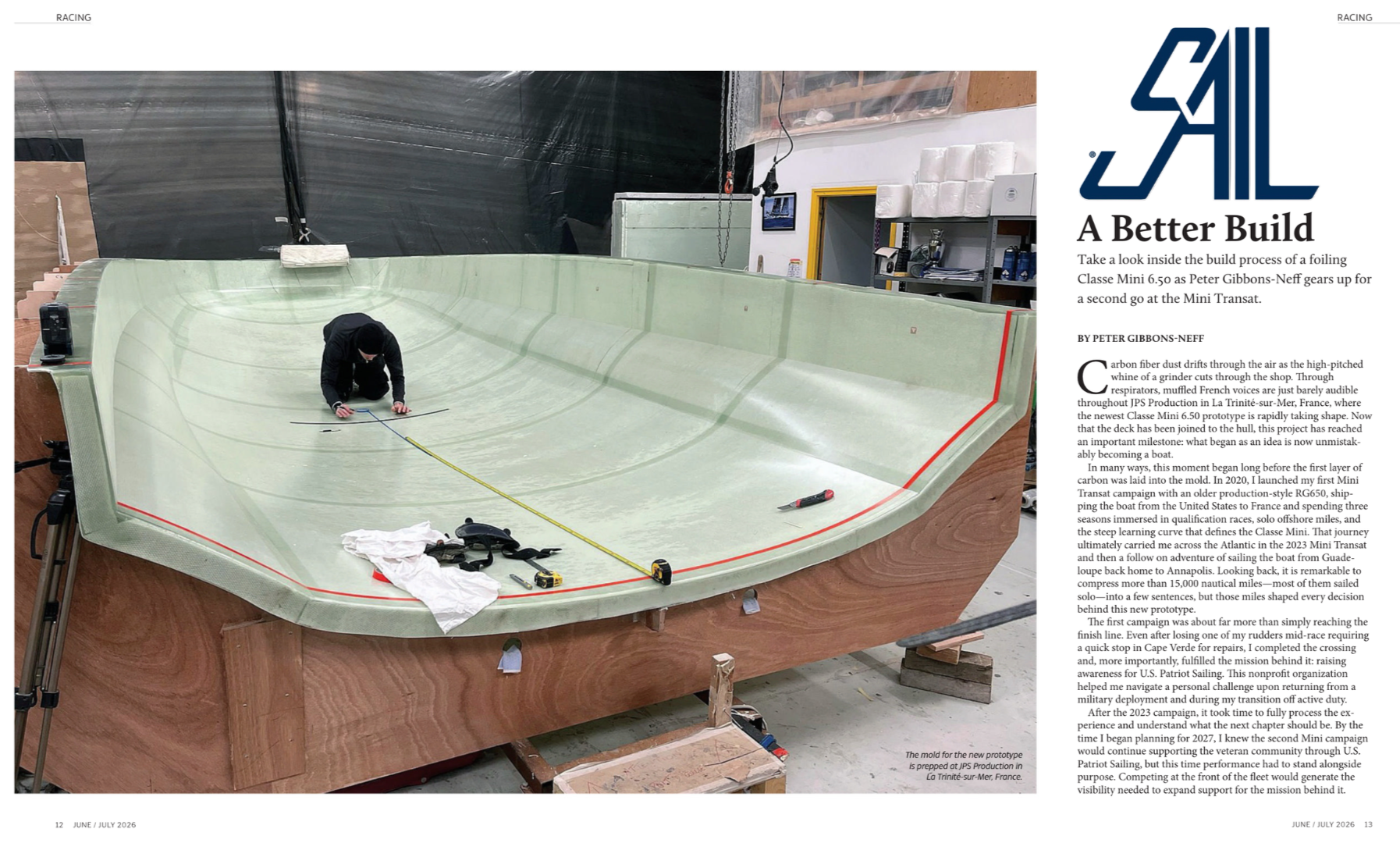
Check out the article published by SAIL Magazine!
Become a Part of This Campaign!
Support this campaign by helping us launch with a tax deductible donation
As we enter the final stage of building this new proto, there is a long list of essential equipment and parts that must go into the boat. While we have some strong initial backing to start the build the boat, and have lowered the overall costs through support from technical partners, but there are still many things we could use your support with!
If you donate to sponsor a part of the boat, we can add your name to it and give you (or your company) shout outs during the installation and the sailing over the next two seasons!
Send me an email and let’s get you on the boat!
Email: peter@pgnoceanracing.com
Check out the CCA article that was published in their Voyages magazine
We are racing to Brazil!
The upcoming Mini Transat starts in September 2027 with 90 Minis crossing the starting line in La Rochelle, France. The fleet will set off to Las Palmas de Gran Canaria in the Canaries for a stop over, then race to Salvador de Bahia, Brazil.
This is exciting for the Classe Mini 6.50 fleet since now we will be crossing both the Atlantic Ocean and equator in the same race. This revived route is already a part of the long history of the race, because it had previously been used six times from 2001-2011.


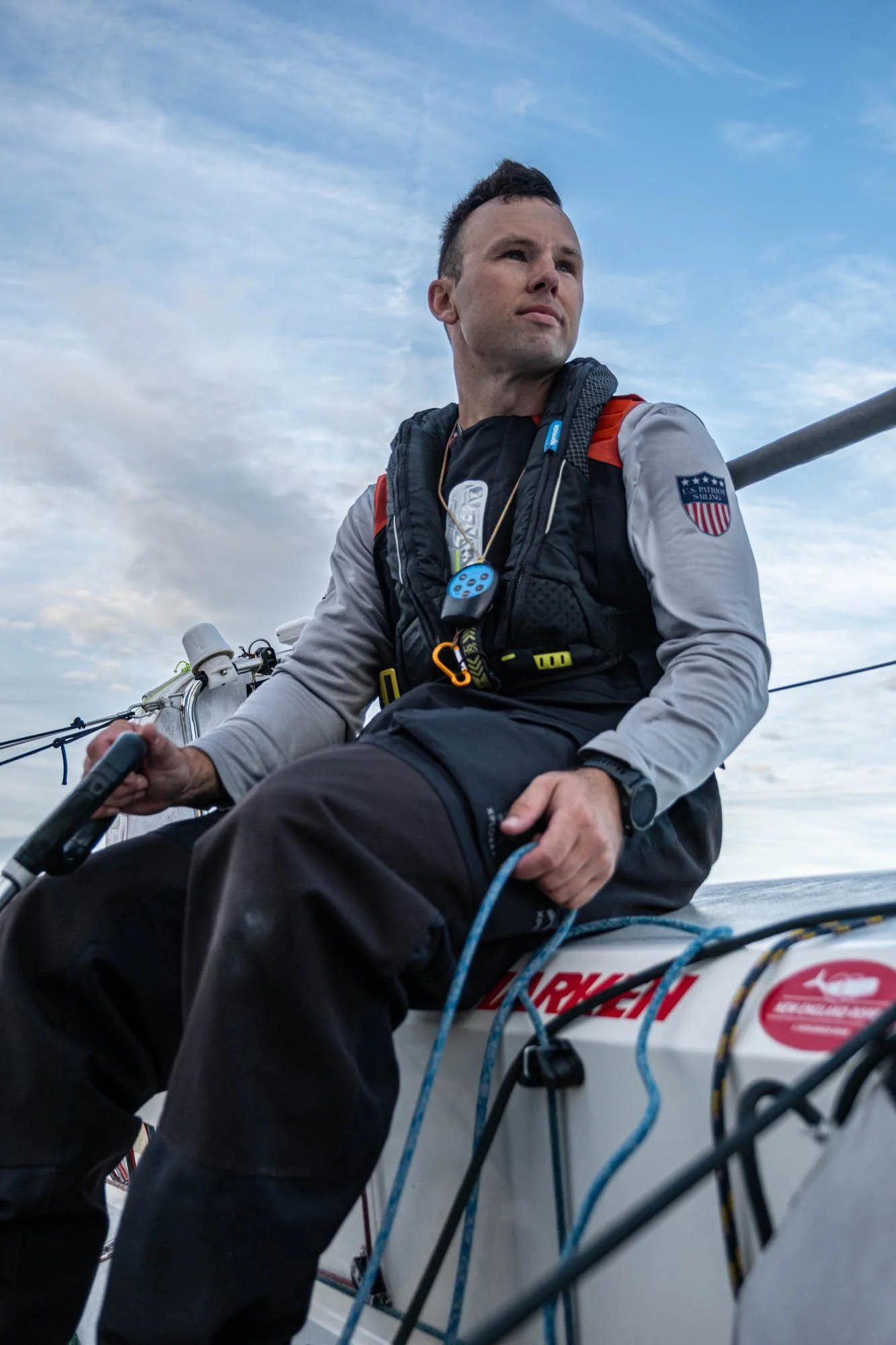
Sailing Terminal Leave in Annapolis this October (Photo Credit: Matt Ellis)
Looking Ahead — The 2027 Mission
While the last campaign focused on raising awareness for U.S. Patriot Sailing, this new mission is about expanding support — enabling the organization to create even more opportunities for veterans.
One major goal of U.S. Patriot Sailing is to introduce a cruising platform where veterans and their families can share calm, restorative experiences on the water — a vital way to strengthen connection and healing.
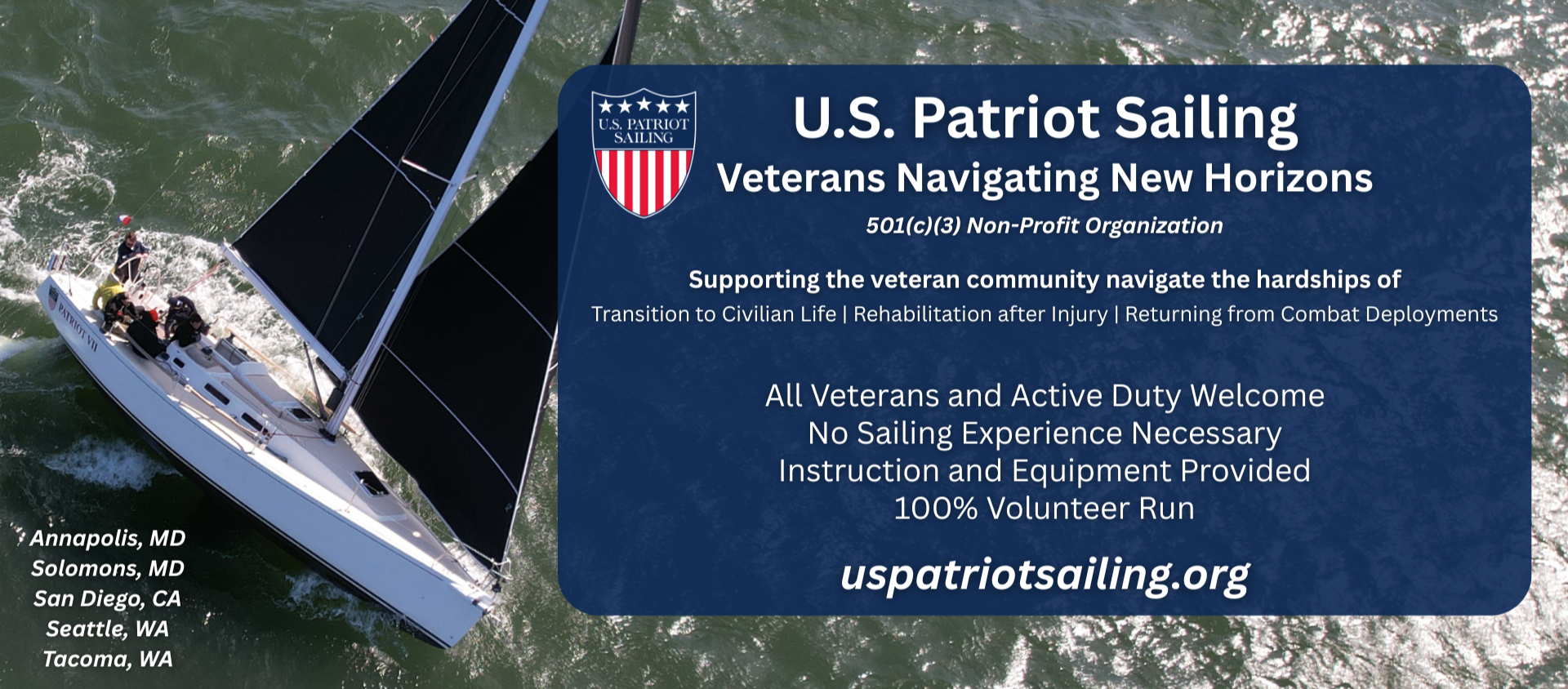
U.S. Patriot Sailing remains 100% volunteer-run, accomplishing its mission solely through the generous support of individual donors and grants. Together, we can make this next phase possible.
Donate HERE to support the U.S. Patriot Sailing team.
From raising awareness to expanding support — together, we’re building more opportunities for veterans.
Follow the Mission
As this campaign builds momentum, please makes sure you are following along and stay connected:
Website: www.pgnoceanracing.com
Social Media: Instagram, Facebook, YouTube (@pgnoceanracing)
Instagram usually has the most frequent and quick updates!
Donate: You can support this new campaign with a tax deductible donation through U.S. Patriot Sailing — helping not only this mission, but also the veterans this organization serves. You can choose where your donation goes exactly: support a local team, this 2027 Mini Transat campaign, or the organization at large. Donate HERE
The support for the 2023 Mini Transat was the foundation for everything we’ve achieved so far. I hope you will be part of the adventure as we set out for this new mission.
New design, new challenge, same mission-driven commitment
Questions? Want to support?
Reach out out to peter@pgnoceanracing.com and jane@pgnoceanracing.com
Watch the video below to learn why I’ve decided to compete in the Mini Transat again:
Is your club, organization, or company interested in hearing about this new mission?